This is the third article in a series on psychedelic chemistry, and the final article focusing on the tryptamine class. In the previous article we learned that though DMT and 5-MeO-DMT lack oral activity, chemistry wizards are able to change that. By making one of a variety of simple alterations to their structure they may be changed into analogs (“research chemicals”, or RCs), each possessing their own unique subset of characteristics including oral activity. That’s because the chemists changed the three-dimensional configuration of the molecules in such a way that the lone pair of electrons situated on the amine’s nitrogen (Figure 1) became shielded, thereby preventing their degradation by MAO. To recap, if one consumes monoamines (such as certain tryptamines) orally, MAO transforms them in the gut and by the time they enter the bloodstream they are no longer psychoactive – Figure 2.
Figure 1. Nitrogen has 7 electrons in total, and 5 valence electrons. It has one electron in each of the three 2p orbitals, which allows it to make three bonds (green), and two electrons in the 2s orbital which exists as a lone electron pair (blue).
Figure 2. After 5-MeO-DMT is consumed orally (1) it enters the gut (2) and is transformed by MAO-A (3). MAO-A uses oxygen to convert the amine into a carboxylic acid (4). This converts 5-MeO-DMT into the nonpsychoactive 5-MIAA (5-methoxyindole-3-acetic acid), the species which enters the circulatory system (5)
This article is going to unpack a study (Figure 3) that showed, by comparing the structures of the naturally-occurring molecules psilocin and bufotenin why the former is orally active while the latter is not. This is another pioneering study from the lab of Dr. David Nichols, who is, along with Albert Hoffman and Sasha Shulgin, in my estimation one of the three true giants of psychedelic chemistry. Its his work and excellent lectures from ESPD50, Psychedelic Science (2013 and 2017), and Breaking Convention that restoked my appreciation for chemistry and inspired me to not only deepened my knowledge, but also to start this series of articles. The outpourings from his majestic mind has fundamentally shaped the topics and content of these articles… Shout out Big D, whut-whut!
Figure 3
The structure and atomic composition of a chemical are obviously critical to our understanding, and the progression of, chemistry and pharmacology. The problem with that is that molecules are small – really small. Even with today’s stupefying repertoire of advanced scientific analytical instruments, there is still no practical way for us to observe their structure directly. So instead we have devised sophisticated methods in which to do so indirectly. One of these methods is called Nuclear Magnetic Resonance (NMR) Spectroscopy, which uses information about the spin of atomic nuclei to determine what a compound’s structure looks like.
In 1980 the team at Purdue University used NMR spectroscopy to investigate how the three-dimensional structures of bufotenin and psilocybin differ from one another. Even though these two compounds are constitutional isomers (Box 1; Figure 4), there is a critical difference in their activity – psilocin is orally active, whereas bufotenin is not. This tiny change, moving the hydroxyl group from position 5 to 4 made this critical difference in the way they are absorbed by a human body. Though 2D-representations of the respective molecules are too low resolution to allude to the reason for the disparity, the researchers (correctly) suspected that by looking at their 3D-structures they would be able to understand why one molecule could resist deamination by MAO, while the other could not.
Figure 4. Bufotenin and psilocin are constitutional isomers, the only difference in their structure is the position of the hydroxyl group (-OH).
NMR spectroscopy revealed that the ethyl sidechain of bufotenin is able to rotate freely, meaning it can spin around on its own axis (Figure 5). That is however not the case for psilocin, something locks it in place, preventing it from rotating freely. The ethyl sidechains of the molecules are identical, which means that whatever is preventing the free rotation of psilocin’s ethyl sidechain is related to the hydroxyl group being situated at position 4, and not 5. To find out exactly what that was, the researchers used specialized software called LAOCN3. Before we explore what they found it would be useful to our interpretation of the results if we brushed up on a couple of elementary concepts in chemistry.
Figure 5
There are two basic types of bonds that atoms can form with one another. The first, called an ionic bond, forms when atoms exchange electrons with one another. This happens if the encountering atoms possess large differences in their respective affinities for electrons (called electronegativity), one atom really wants to lose an electron, while the other really wants to gain it (Figure 6). So an electron (or electrons) are exchanged, and because it is negatively charged the transfer changes the charge of the each atom. The atom that gains the electron gains a negative charge and thus becomes negative, while the atom that loses the electron loses a negative charge and thus becomes positive. And as the old adage goes, opposites attract – the oppositely-charged atoms come together and form a stable bond with one another.
Figure 6. Ionic bonds.
The other type of bond that can unite atoms is a covalent bond. This happens when atoms with similar affinity for electrons encounter one another, neither really wants to lose/gain an electron so they reach a compromise – they share their electrons among each other. Both atoms pretend that the electron that it shares, as well as the electron shared by the other atom, belongs to it (Figure 7). It’s this overlap of shared electrons that connects the atoms together into a single molecule.
Figure 7. Covalent bond.
Because there are no electrons that are transferred in the covalent bond the atoms don’t assume a charge as was the case with ionic bonds. However, that’s only partially true… In certain cases, the atoms that take part in a covalent bond do have some difference in their affinity – not enough for them to exchange electrons and form an ionic bond, but enough so that when they form a covalent bond and share electrons those shared electrons are closer to one atom than the other. This is known as a polar covalent bond. The atom to which the shared electrons are in closer proximity has a higher electronegativity and thus becomes partially negative (δ-). Conversely, the atoms with lower electronegativity are further from the shared electrons and are partially positive (δ+). Because of this asymmetrical charge, polar molecules are able to form weak bonds with other polar molecules, or with compounds that have a net charge. Now that we’ve covered some basic concepts let’s get back to the results of the study and apply what we’ve learned by taking a closer look at psilocin (Figure 8).
Figure 8. In the red area is a hydroxyl group (Figure 9), and in the blue area is a tertiary amine (Figure 10).
Figure 9. The electronegativity of hydrogen (white) is 2.1, while that of the oxygen (red) is 3.5. This difference of 1.4 in their electronegativity is not enough to form an ionic bond, but does lead to partial charges – oxygen has a higher affinity for electrons meaning the electrons are closer to it and assumes a partially negative charge (δ-), while hydrogen assumes a partially positive charge (δ+).
Figure 10. The tertiary amine group consists of a nitrogen (blue) with an electronegativity of 3.0, connected to three carbons (grey) each with an electronegativity of 2.5. Nitrogen has a higher affinity for electrons and pulls the electrons closer to it, leading to a partial negative charge (δ-), while the carbons have partial positive charges (δ+).
Taken together: psilocin has hydroxyl group at position 4 with a partially negative oxygen and a partially positive hydrogen, and an amine with a nitrogen that is partially negative and carbons that are partially positive. Because of these partial charges something interesting happens – the partially positive hydrogen from the hydroxyl group and the partially negative nitrogen from the amine attract one another (Figure 11).
Figure 11
The hydrogen and nitrogen form a special type of bond with one another known as hydrogen bond (Box 2) which pulls the two atoms closer to one another, changing the shape of the molecule – Figures 12 and 13.
Figure 12. The partial positive charge on the hydrogen and partial positive charge on the nitrogen (left) are attracted to one another and form a hydrogen bond which pulls the atoms closer to each other, changing the molecule’s shape (right).
Figure 13. The hydrogen of the hydroxyl-group is bent backwards into a gauche conformation while the ethyl tail bends towards the indole ring to further shorten the distance between them.
It’s this hydrogen bond that locks the ethyl sidechain into place by forming a closed loop (Figure 14), preventing it from rotating freely. In bufotenin the ethyl sidechain can rotate freely because no such hydrogen bond exists. Because the hydroxyl-group is at position 5 and not 4, the partially charged molecules are too far away from one another to form the hydrogen bond, change the shape of the molecule, and lock the ethyl sidechain into place.
Figure 14
But what has any of this to do with the difference in oral activity between the two molecules? Turns out, everything. It’s this hydrogen bond and closed loop formation in psilocin which shields the lone pair of electrons situated on the nitrogen. Because MAO cannot access the electrons it cannot deaminate the molecule – this is why it can pass through the gastrointestinal system unchanged.
But there’s more. The hydrogen bond and resulting closed loop formation also lead to several other important changes in the property of the molecule which further accentuates its efficacy and potency as an orally-active psychedelic tryptamine. After generating 3D-models of the respective molecules, the researchers went on to compare their pKa (Box 3) and Log P (Box 4) values..
When they measured the pKa and the Log P for both psilocin and bufotenin they found the following:
The pKa for Bufotenin is 9.67, meaning that at that specific pH-value equal amounts of the molecule will be present in both the ionized (water soluble) and protonated forms (lipid soluble). When the molecule is in the blood, which has a pH of about 7.4, almost all of it (99.5%) is in the ionized form. In contrast, psilocin has a pKa of 8.47, closer to the pH of blood. So for psilocin, only about 52% is in the ionized form. That means that in the blood, 48% of psilocin will be in its unionized form versus only about 0.5% when it comes to bufotenin. As it is only the unionized form of the drug that can cross cell-membranes, this has profound implications for the potency of these two drugs – psilocin is not only able to better withstand degradation by MAO, but once it is in the blood there is also much more of it available in a form that can cross cellular membranes and thus can reach the target receptors and exert an effect.
The difference in pKa is also related to the shielding of the electron lone pair by the hydrogen bond. As we have learned, amines possess a nitrogen with a lone pair of electrons. These free electrons, which carry a negative charge, are all too happy to snap up positively-charged protons (H+) from a solution they are in. This is, according to the Bronsted-Lowry acid-base theory, the very definition of a base – something that accepts protons. When it comes to psilocin the lone pair of electrons are shielded and are thus much less likely to accept protons. As a consequence, psilocin is less basic that is bufotenin.
The researchers also detected a difference in the Log P values – 1.19 for bufotenin, and 1.45 for psilocin. In the Log P scale a negative value indicates a compound which is hydrophilic, whereas a positive value indicates one that is lipophilic. Both these compounds are thus lipophilic, and psilocin, with the higher value, is more lipophilic. For drugs, in general, it is preferable for them to be lipophilic so as to be able to cross cell membranes, but not too lipophilic because then they immediately migrate to, and are stored in, the body fat. Research indicates that a Log P value of about 3.0 is the “sweet spot”, so psilocin is closer to this number, again indicating that its properties are more favourable once it enters the body.
The researchers started with a simple question: how is it that two isomeric compounds with such a small difference have such widely different properties when they are consumed orally? With NMR Spectroscopy we learned that it all has to do with the fact that because the hydroxyl group of psilocin is a little bit closer to the amine it was able to form a hydrogen bond between the two groups. This hydrogen bond shields the electron lone pair from deamination by MAO, which means that, unlike bufotenin, psilocin is orally active. The hydrogen bond also decreases the molecule’s proton-accepting capacity thereby decreasing its pKa value which means that at blood pH there is more of psilocin in the non-ionized (lipid soluble) form which is able to cross cell membranes and thus enter the central nervous system (CNS). Finally, we saw that it also affected the Log P value, and that psilocin is a more lipophilic compound, closer to an ideal value for drugs to effectively enter and bind to the appropriate receptors in the CNS.
I hope you enjoyed this journey, in the next article we will start our exploration of the phenethylamine class.
Faan Rossouw was born and raised in Cape Town (South Africa) and currently resides in Montreal (Canada). He holds a MSc in Plant Science, and is the co-founder and Chief Strategy Officer of Indeeva Biomedical, a medical cannabis company that focuses on producing condition-specific cannabinoid therapeutics. Faan possesses theoretical expertise and practical experience in biological production systems, natural and pharmaceutical product development, phytochemistry, and psychopharmacology. Though his background is rooted in science he is most passionate about, and thrives in, the intersection of science, the humanities, and commerce. He is interested in how we can leverage the properties of the new global economy to develop superior and sustainable therapeutic solutions. In his free time he loves to practice Brazilian Jiu Jitsu, spend time in nature with his partner Robyn, or kick back in his lazy boy with a book, a cup of pu-erh tea and his cat Luna.
This is the second article in a series on psychedelic chemistry. In the previous article, I introduced the tryptamine class of psychedelics, and we discussed five well-known examples: DMT, 5-MeO-DMT, bufotenine, psilocybin, and psilocin. While the latter two, primary psychedelic constituents of Psilocybe mushrooms (Figure 1), are orally active, neither DMT, 5-MeO-DMT, nor bufotenine are. In this article we will explore two types of alterations that synthetic chemists can make to those molecules to bestow oral activity upon them. These alterations lead to the psychedelic tryptamine analogs (“research chemicals”): AMT (Indopan), MiPT, DiPT, 5-MeO-aMT (Alpha-O), 5-MeO-MiPT (Moxy), and 5-MeO-DiPT (Foxy Methoxy).
Figure 1
Monoamine Oxidase
L-monoamine oxidase (MAO) is a family of enzymes that catalyze the oxidation of monoamines. Monoamines contain a single amine connected to an aromatic ring via a 2-carbon chain, and include neurotransmitters such as serotonin and norepinephrine, as well tryptamines (Figure 2) such as DMT, 5-MeO-DMT, and bufotenin. The reason therefore that these compounds are not active after being consuming orally is because once they enter one’s gut they are inactivated by MAO.
Figure 2
If you want to experience the psychedelic effects of these compounds there are two basic strategies. The first is to use a route of administration that bypasses the gut. Smoking and vaporizing are by far the most common ways to achieve this, but are also the most intense (rapid onset) and shortest-lasting methods. Accordingly, some people favour other non-oral routes such as sublingual (under the tongue), insufflation (in the nasal passage), and rectal administration. Each of these administration routes has its own set of unique pharmacokinetic properties that may be favoured by certain people depending on the context and/or intention. Different strokes for different folks.
But that applies equally to oral delivery, which is unsurpassed in terms of its simplicity (swallow and then you’re done), ease (no thumbing around the butthole or snorting fiery salts up your schnoz), and duration. Except for transdermal delivery, which is technologically complex and has severe restrictions on what can be administered, oral delivery is the longest lasting. Hence its popularity for journeyers that wish to go in deep. So even with a number of non-oral administration routes available, there is still good reason to utilize the oral route.
How to do so if we all walk around with an enzyme in our belly that will deactivate the psychedelic? Simple – consume another compound, called a monoamine oxidase inhibitor (MAOI), that will deactivate that enzyme. Ayahuasca is a prime example of this, though there are a number idiosyncratic formulas of the brew, in essence, it is based on two core ingredients (Figure 3). One contains DMT, the most common being chacruna (Psychotria viridis), and the other contains the MAOI, which is always the ayahuasca vine (Banisteriopsis caapi).
Figure 3. A pot filled with chacruna leaves containing DMT, as well woody material from the ayahuasca vine containing harmine, tetrahydroharmine, and harmaline (MAOI’s). The former provides the visionary punch, the latter ensures that DMT is not broken down in the gut and is able to enter the blood plasma unchanged.
Synthetic chemists love to ask “what if” questions. Like “what if” I make this simple change to the molecular nature of the compound, how does that then affect its properties? These type of questions are explored not only in the name of scientific curiosity, but also because studying how simple changes affect the properties of compounds informs us about its structure-activity relationship, as well provide intimations of what the target receptor looks and behaves like. To the specific question of whether or not a simple alteration to DMT/5-MeO-DMT can actuate oral activity chemists have thus far provided two answers – α-methylation (Figure 4) and N-alkylation (Figure 6).
α-Methylation
Figure 4
As we covered previously, DMT is a tryptamine molecule with two methyls at the N-position. So what would happen if, instead of adding two methyls to the N-position of the tryptamine, we added a single methyl to the alpha-position? This yields AMT (alpha-methyltryptamine; Figure 5), a molecule originally developed in the ‘60s by a Michigan-based pharmaceutical company called Upjohn and which was prescribed in the USSR as an antidepressant. It is at once psychedelic, entactogenic (like MDA/MDMA), and a stimulant with an oral dose typically lasting upwards of 12 hours.
Figure 5
The same goes for 5-MeO-tryptamine (mexamine) – if instead of adding two methyls to the N-position to form 5-MeO-DMT we add a single methyl to the alpha-position, we get 5-MeO-AMT – 5-methoxy-alpha-methyltryptamine (Figure 5). This orally-active and potent psychedelic, commonly known as ‘Alpha-O’, is sometimes peddled as faux-LSD. This is problematic as, unlike LSD with no known lethal toxicity, 5-MeO-AMT has lead to deaths at fairly low doses. It’s not a War on Drugs, it’s a War on People.
With both AMT and 5-MeO-AMT there is a chiral centre at the alpha-position. Attaching a single methyl to the alpha position potentially yields either an S- or R-configuration. Both are psychoactive, both orally active, but work by Dr. David Nichols lab has found that the S-enantiomer is more potent.
N-Alkylation
Figure 6
With N-alkylation we manipulate DMT and 5-MeO-DMT as the departure point to realize oral activity. Both these molecules possess two methyls on the amine nitrogen. Work again by Dr. Nichols’ lab has found that if you replace one, or both, these methyls with isopropyl, the molecule becomes orally active (Figure 7).
Figure 7
In the case of DMT, if a single methyl is replaced by an isopropyl it results in MiPT (N-methyl-N-isopropyltryptamine), an obscure psychedelic with indistinct effects first introduced to the world in TiHKAL. In the case of 5-MeO-DMT, the same single substitution results in 5-MeO-MiPT (5-methoxy-N-methyl-N-isopropyltryptamine). Commonly known as “Moxy”, it is an extremely potent (4 to 6 mg p.o.) psychedelic with stimulating properties.
As my articles on chemistry are intended for the general reader, I just want to take a brief moment here to remind you that the reason I always write out the substitutive name of each compound is because it describes the actual molecule. If we know the substitutive name, we can draw the molecule, and vice-versa. Let’s briefly review this by using Moxy as an example (Figure 8), but please feel free to skip over to the next paragraph if this is old news for you by now. Starting from back we have tryptamine, so our “foundational” structure is an indole ring with an ethylchain at 3 which connects to an amine group (blue). Then we start from the front – at position 5 we have a methoxygroup (green), at N1 we have a methyl (fuschia), and then at N2 we have an isopropyl (red).
Figure 8
If both methyls are substituted by isopropyl, in the case of DMT the result is DiPT (N,N-diisopropyltryptamine), another bizarre creation of Sasha that primarily produces audial distortions. With 5-MeO-DMT the double substitution leads to 5-MeO-DiPT (5-methoxy-N,N-diisopropyltryptamine) which likely has the most endearing street name of any psychedelic – “foxy methoxy”. Note that in both cases, though making the additional isopropyl substitution retains oral activity, it decreases potency.
What’s Going On Here?
So why is it that in both the case of DMT and 5-MeO-DMT replacing a methyl with a slightly larger and more complex compound makes it impervious to deamination by MAO thereby giving it oral activity? To give us a clue we need to look at the nitrogen in the amine group – Figure 9. In order for MAO to deaminate a molecule, it needs to access the lone electron pair of electrons (blue) on the nitrogen. A change in the molecule, such as substituting functional groups, changes its 3D-conformation. In the case of substituting a methyl with an isopropyl group on the amine, it changes the molecule’s 3D shape in such a way that shields the lone pair of electrons from MAO, thus giving it oral activity.
Figure 9. Nitrogen has 7 electrons in total, and 5 valence electrons. It has one electron in each of the three 2p orbitals, which allow it to make three bonds (green), and two electrons in the 2s orbital which exists as a lone electron pair (blue).
How do we know this is the case that it’s the molecule’s 3D shape that protects the lone pair from attack by the MAO and thus allows it to retain oral activity? Earlier in this article, I said that MAO breaks down tryptamines. We then spoke about DMT and 5-MeO-DMT, but what about psilocybin and psilocin? They are naturally-occurring tryptamines, yet they are also orally active – how so? Pioneering work by Dr. David Nichols in the ‘80s using NMR spectroscopy showed that the fact that psilocin has a substitution at position 4 and not 5 (as with DMT/5-MeO-DMT) causes a critical change in the molecule’s 3D structure which ensures the compound is orally active. This study and all the profound implications for psychedelic chemistry gleamed from it will be the topic of our next article.
Afterword:
If it is your intention to consume DMT, and especially 5-MeO-DMT, orally by combining it with an MAOI please do your homework. And once you’ve done your calculations, double-check them. Terence McKenna used to quip that the only real danger with DMT is “death by astonishment”. Though that is the case for smoking it, overdoing orally-administered DMT/5-MeO-DMT can lead to serotonin shock, convulsions, and in some cases, death. The Psychedelic Ship is leaving the harbour, please don’t drop any cannonballs on the deck.
About the Author
Faan Rossouw was born and raised in Cape Town (South Africa) and currently resides in Montreal (Canada). He holds a MSc in Plant Science, and is the co-founder and Chief Strategy Officer of Indeeva Biomedical, a medical cannabis company that focuses on producing condition-specific cannabinoid therapeutics. Faan possesses theoretical expertise and practical experience in biological production systems, natural and pharmaceutical product development, phytochemistry, and psychopharmacology. Though his background is rooted in science he is most passionate about, and thrives in, the intersection of science, the humanities, and commerce. He is interested in how we can leverage the properties of the new global economy to develop superior and sustainable therapeutic solutions. In his free time he loves to practice Brazilian Jiu Jitsu, spend time in nature with his partner Robyn, or kick back in his lazy boy with a book, a cup of pu-erh tea and his cat Luna.
The ensuing series of articles are intended for the general reader that, like myself, have an appreciation for the beauty of chemistry, and/or desire to learn more about it. That being the case I am going to be pedantic throughout the articles, deconstructing technical terms and “dirty pictures”* with the assumption that you do not know what they mean. That way we can learn them as we go along. If you are already fluent in Chemistrian, it goes without saying that you are free to skip over these and peruse selectively. This first article is an introductory exploration of the tryptamine class, and will be followed by further forays into other interesting aspects related specifically to this class before I move on to the others. Enjoy.
The Three Main Classes of Psychedelics
There are three classes to which most psychedelic compounds belong – the tryptamines, phenethylamines, and ergolines (Figure 1). The tryptamines include most of the well-known naturally-occurring psychedelics, including compounds derived from entheogenic fungi (psilocybin and psilocin), DMT, 5-MeO-DMT, bufotenin, and ibogaine. Mescaline is the only common naturally-occurring phenylethylamine, yet the class includes numerous well-known synthetic compounds such as MDMA and the 2-C’s. Ergolines most notable representatives include the naturally-occurring LSA and the semi-synthetic compound that turned on a generation, LSD.
Figure 1. Notable psychedelic tryptamines include (from top right): 5-MeO-DMT and bufotenin (Bufo alvarius), psilocybin and psilocin (Psilocybe mushrooms), ibogaine (Tabernanthe iboga), DMT (Chacruna viridis), and various analogs including: 4-HO-MET (pictured), 5-MeO-DiPT, DPT, MET, and 4-AcO-DMT. Notable phenethylamines include (from top left): Mescaline (Peyote), the 2C’s (Inventor Sasha Shulgin pictured), MDMA (MAPS logo), and a wide range of analogs including: Bromo-DragonFLY (pictured), DOM, DOI, and NBOMe. Notable ergolines include (from top): LSD, LSA (Ipomoea sp), and various analogs including: AL-LAD (pictured), ALD-52, and 1-P-LSD.
Tryptamines
Psychedelics of this class are all derived from tryptamine (Figure 2), a ubiquitous endogenous ligand and agonist of the human trace amine-associated receptor 1 (TAAR1). The name tryptamine is derived from its structural similarity to l-tryptophan (Figure 3), an essential amino acid and the precursor to both serotonin and melatonin.
Figure 2. Tryptamine consists of an indole ring connected to an amine through an ethyl attached to position 3.
Figure 3. L-tryptophan
Substituted Tryptamines
Although the “template” for psychedelics tryptamines is the molecule with all the various positions presented in Figure 2, in actuality, there are limitations to how this manifests in psychedelic compounds. This is either because certain modifications are either difficult to impossible, or they lead to inactive compounds. An example of this is if something is attached to position 2 (Figure 2) the compound becomes a serotonin-2A receptor antagonist therefor losing its psychoactivity. Based on these restrictions we can simplify the template presented in Figure 2 to Figure 4, which is called the ‘substituted tryptamine’. The three main changes that synthetic chemists can make to derive psychedelic analogs is derived from this figure.
Figure 4
First, one can add side chains to either position 4 or 5, and those side chains have to contain an oxygen molecule. We can confirm this by looking at all the well-known psychedelic compounds that have side chains attached to the ring – bufotenine has a hydroxyl (OH) group at position 5, 5-MeO-DMT has a methoxy (O-CH3) at position 5, psilocin has a hydroxyl (OH) group at position 4, and psilocybin has a phosphoryloxy (OPO3H2) at position 4. All at position 4 or 5, all with an oxygen included.
The second major change that can be made is a substitution at the α-position. Chemists can methylate (add a methyl group) the alpha-position to change a non-orally active species into one with orally active. We will explore this in full detail in the next article.
The final feasible change is adding sidechains to positions N1 or N2. All five of the major naturally-occurring species we have discussed thus far possess methyls at both positions (hence “dimethyl” from which the DM in DMT is derived – more below). These methyls may be substituted with more complex alkyls, another way in which chemists can turn non-orally active tryptamines into orally active species.
Psychedelics Tryptamines
Now that we have an idea of the chemical “archetype” of tryptamine psychedelics and the possible changes chemists can make, let’s have a look at the five most well-known naturally-occurring examples: DMT, 5-MeO-DMT, bufotenin, psilocybin, and psilocin.
DMT
The substitutive name for DMT is N,N-dimethyltryptamine. One of the most magical parts of learning chemical language is that from it one can deduce what they actual molecule looks like, and vice-versa. Let’s explore that using DMT as an example. Starting from the back we have tryptamine (blue), so we know that is the foundation of our molecule – the indole ring with an ethyl in position 3 attaching to an amine. Then we have “dimethyl” (red), meaning two methyls. Okay so now we know it’s the tryptamine molecule that has two methyls added to it. And where are these two methyls? They’re both positioned on the nitrogen of the amine, hence ‘N,N’.
Figure 5
What’s interesting about N,N-dimethyltryptamine is that it forms the foundation for all four other compounds we are going to discuss. In other words, all four of them are N,N-DMT with a little something extra. We can see that because the term is contained within the substitutive name of all four other molecules. Let’s have a look.
5-MeO-DMT
The substitutive name for 5-MeO-DMT is 5-methoxy-N,N-dimethyltryptamine (Figure 6). We can see that it has the whole name of DMT in it, so when we draw it we know we can start with that molecule – a tryptamine with two methyls on the amine (red and blue). What’s left is ‘5-methoxy’, which means that at position 5 we have a methoxy (green). A methoxy is a combination of a methyl and an oxygen – hence the name.
Figure 6
Bufotenin
The substitutive name for bufotenin is 5-hydroxy-N,N-dimethyltryptamine (Figure 7). As was the case with 5-MeO-DMT, the molecule has DMT as a starting point (red and blue). But this time, instead of a methoxy at position five, we have a hydroxy, -OH (green).
Figure 7
Psilocin
The substitutive name for psilocin is 4-hydroxy-N,N-dimethyltryptamine (Figure 8). Same story, it starts with the structure of DMT (red and blue). If we compare them, we can see the psilocin is extremely similar to bufotenin, the only difference being where bufotenin had the hydroxy at position 5, here it’s at position 4 (green). In a future article we will learn why this small change is crucial to ensure that psilocin, unlike bufotenin, is an orally active species.
Figure 8
Psilocybin
The substitutive name for psilocybin is 4-phosphoryloxy-N,N-dimethyltryptamine (Figure 9). By now I’m sure you’ve grokked it – it’s a DMT molecule (red and blue) with a little something extra. As with it’s cousin psilocin, that something extra is at position 4, but here instead of a hydroxy, it’s a phosphoryloxy with the composition OPO3H2 (green).
Figure 9
All five molecules and their substitutions are reviewed in Figure 10 below.
Figure 10
In the next article, we will continue to explore psychedelic tryptamine chemistry by looking at the two changes synthetic chemists can make to DMT and 5-MeO-DMT to make them orally active.
* = Sasha Shulgin used to affectionately refer to organic molecule structures as “dirty pictures”.
About the Author
Faan Rossouw was born and raised in Cape Town (South Africa) and currently resides in Montreal (Canada). He holds a MSc in Plant Science, and is the co-founder and Chief Strategy Officer of Indeeva Biomedical, a medical cannabis company that focuses on producing condition-specific cannabinoid therapeutics. Faan possesses theoretical expertise and practical experience in biological production systems, natural and pharmaceutical product development, phytochemistry, and psychopharmacology. Though his background is rooted in science he is most passionate about, and thrives in, the intersection of science, the humanities, and commerce. He is interested in how we can leverage the properties of the new global economy to develop superior and sustainable therapeutic solutions. In his free time he loves to practice Brazilian Jiu Jitsu, spend time in nature with his partner Robyn, or kick back in his lazy boy with a book, a cup of pu-erh tea and his cat Luna.
The use of heroin and abuse of opiate pain-relievers has reached an all-time high in the USA. The addictive nature of these drugs has left us scrambling for treatment options that can offer us freedom from this epidemic.
The fact is, traditional treatments don’t work for everyone, and many are starting to look for more effective alternatives. Treatment that results in long-lasting sobriety is different for each individual.
When a traditional method isn’t working, it may be time to consider something new. Ibogaine is one such treatment, and the rise in opiate addiction has led to an increased interest in this alternative treatment for opiate and heroin addiction.
Iboga and Ibogaine
Ibogaine is just one of the many alkaloids found in the Tabernanthe Iboga shrub. Raw Iboga is one of the most powerful psychedelic plants in the world and has been used for its profound spiritual effect on those who experience it.
Iboga plant and Ibogaine molecule. Photo: Samwise – via Chacruna.net
This is why, for centuries, the Bwiti religion of Africa have been using Iboga as a way to induce introspection and a higher self-awareness.
In the early 1900s Ibogaine was extracted from the Iboga root and used by athletes, in very small doses, as a stimulant. At the time, Ibogaine was used because of the way that it excites certain pathways within the brain.
But in the 1960s, all of that changed.
Ibogaine as an Addiction Treatment
Howard Lotsof was suffering from an addiction to heroin when he tried Ibogaine for the first time in 1962. He was 19 years old and experimenting with any substance he could find.
Hours after trying the Ibogaine, Lotsof had an epiphany—he had not taken opiates for almost a day, yet, he had no withdrawal symptoms.
Ibogaine had allowed Lotsof to break his heroin addiction with just one dose. He knew immediately that these implications could have a massive impact on others who were struggling with heroin and opiate addiction.
But, given the importance of this conclusion, Lotsof realized he needed to perform further testing. So, he rounded up a few of his opiate and heroin-addicted friends, gave them the Ibogaine, and the results were stunning—none of his friends went into withdrawal.
This was the beginning of Ibogaine treatment for addiction. As Lotsof introduced more and more studies on the effects of Ibogaine on withdrawal, it became a real point of interest for scientists who were looking for more effective ways to help addicts beat their dependence.
Unfortunately, this also came at a time when the US government began making psychoactive substances illegal. Ibogaine was classified as a Schedule 1 drug, putting it in the same class as the drugs that it was meant to treat. It also made it very difficult for scientists to study its positive effects on addiction.
Lotsof was forced to study Ibogaine and treat addicts in Europe, where he founded the Global Ibogaine Therapy Alliance. He worked hard to try and change the laws in the USA and other countries, but, unfortunately, lacked the resources he considered necessary to do so.
Ibogaine has a unique effect on the chemical levels in the brain.
When the addict begins using opiates, these drugs release massive quantities of chemicals that plug into the brain’s neurotransmitters.
The brain becomes addicted to these high levels of pleasure-inducing chemicals, changing the way that the brain would normally function.
Because of these addictive adaptations, when the supply of drugs is cut off, the brain goes into a frenzy. Depression, seizures, and other symptoms are often the result. This is what we call withdrawal.
Ibogaine has the ability to work on the chemical receptors in the brain. It repairs neurons in the brain that have been damaged due to opioid addiction. It also restores balance to the brain so that naturally produced chemicals can work properly to control feelings of pleasure and happiness.
This gives addicts a fresh start, and the ability to start focusing on changing their lifestyle, instead of just fighting withdrawals.
But Ibogaine doesn’t just treat the withdrawal symptoms, it also affects the brain on a psychological level.
Psychological Effects of Ibogaine
In many addicts, though not all, Ibogaine induces a dreamlike state.
Those who have experienced this state often say that Ibogaine made them face their fears, past traumas, and helped them conquer many of the underlying reasons that caused their addiction in the first place.
This kind of psychological clarity and introspection is unique to the effects of Ibogaine and psychedelic medicines.
This is also why Ibogaine has been recommended, by some, as a treatment for trauma and other mental conditions—such as depression, anxiety, and PTSD.
The psychedelic effects of Ibogaine have the ability to treat these mental issues in ways that therapy never could. Some describe it as taking a look at themselves from the outside in, finally being able to address the core of their problems and address the root cause.
Is Ibogaine Right for You?
Just like any other treatment method, Ibogaine requires close supervision from medical professionals. Because of the way Ibogaine reacts in the body, it can be dangerous. This is why it is recommended that Ibogaine treatment should be done in a medical setting.
Addiction is a deeply personal disease and one that requires a different type of treatment for every individual. Ibogaine is not for everyone. It’s important to look into all of your options and talk to your physician.
Sobriety is possible. Every individual deserves a happy and successful life. Take the time to study all of the treatment options available and make the right decision for you or your loved one.
About the Author
Aeden Smith-Ahearn was a massive heroin addict for 7 years. After trying every traditional treatment method available, he put his last hop into Ibogaine treatment. Now, he has been clean and sober for 5 years while also helping thousands of addicts find freedom through Ibogaine. He is currently the treatment coordinator for Experience Ibogaine treatment centers and works hard every day to help people find success and happiness in life.
How can we use our mind, intellect, or heart to diffuse or address the origin of our problems that arise from the same place?
Iboga, Ayahuasca, Kambo, and 5-MeO-DMT have wandered from their origins and into our western culture during an ominous time for humanity – a time that is naturally calling for healing and metamorphosis. At Oka Center, it is our privilege to work with and integrate these medicines with their traditional uses into our lives and the lives of all who come here. Each guest brings benefits to all who are involved.
For us, the traditional use of entheogens is just as important (or more) as the recently developed ideology and protocols created by western doctors, scholars, and laypeople. Westerners have only recently started using these medicines significantly within the last 50 – 60 years. Traditional indigenous use is centuries old – perhaps older according to many – and comprises the vast majority of experience with these powerful medicines, not to mention their original discovery. Generations of use has naturally given rise to refined protocols, beautifully disarming spirituality, sublime music, and just the right amount of humor. We include standardized western medical guidelines to ensure safety which is imperative, but not intrusive. Particularly with ibogaine, it is of utmost importance to have medical prescreening, monitoring, and supervision before, during, and after the treatment.
We are grateful for the research and empirical data that has helped to assess the risks and benefits of Ibogaine and other entheogens, particularly from Ken Alper and the late Howard Lotsof. At the same time, the new trend in attempting to fit entheogens into the framework of the western medical schema is questionable.
Since there are enough anecdotal reports that suggest so many applications and benefits of these entheogens, it makes sense to try and “legitimize” them in order to make them available in our healthcare system. However, we need an honest review of our healthcare industry – especially within the mental health sector – to gauge how genuine a reference point our system is for validating or practicing any medicine or modality, especially for plant-based medicine which is off limits for patenting.
The enormous profit margins of the healthcare industry would be significantly reduced if lifelong prescription medications were no longer considered final solutions to common mental “disorders.” You need only do minimal research on the ruthless financial methods and ethics of the healthcare industry to come to some disturbing conclusions. In our experience, many people coming to Oka Center have reached a point at which their ongoing use of prescribed medications has provided no change or only damaged their situation further.
For those of you who want to get off hard drugs and have heard about the medicinal value of plant medicine like ibogaine, you might not see the relevance of its traditional use. Perhaps you have come to ibogaine because of its ability to alleviate opiate withdrawal or interrupt addiction, or your friend of a friend got off dope with ibogaine and it was miraculous.
While we do not force our ceremonially based protocol on anyone, almost everyone – including those coming to get off hard drugs – respond very positively to it. In the end, it is embraced and appreciated as an important element of the healing process.
Ruptured spirituality is common to everyone that comes to Oka Center – drug use or not: We are broken, tired, angry, bored, confused, stressed, frustrated, and oftentimes infinitely sad. Reflection, prayer, song, and dance may seem frivolous at first, but these things are much needed in our lives and are important in respecting the medicine and for laying the groundwork for your experience.
In many ways, our western culture has separated itself from nature. As individuals, we have lost an innate intelligence or awareness because of it. What might have been awe and wonder has been replaced with sarcasm and cynicism. Although our advancements in technology and industry have paved the way for practical efficiency and comfort, the downside is that it is getting increasingly easier to forget where we come from and where we are going. It is normal for us to feel alienated and unhappy in such a competitive, indifferent society built with concrete, computer chips, and suffocating ethical standards and expectations. Hard drug use is an appropriate response as any attempt to get through each day with a smile on your face.
Whether it is drugs, alcohol, gambling, depression, anxiety, exhaustion, or whatever else we have adopted or suffered from in the attempt to get by, somewhere along the line we realize discomfort, harm, and despair. Naturally, this is when we look for a way out of these negative cycles.
Beyond a certain point, to truly view and examine ourselves deeply and objectively in waking life can be almost impossible. The attempt at doing so most often ends up being more of the same self-deception. How can we use our mind, intellect, or heart to diffuse or address the origin of our problems that arise from the same place?
This is one of the main reasons why we advocate for the use of entheogens. The incessant internal rapport we have with ourselves never allows us to look beneath the masks we have created which project the flawless versions of ourselves we present to the world. Entheogens have a way of blasting our masquerade into pieces. With any luck, we are left with a beautiful nightmare that shines a light on our humanness: our fallibility, our fragility, our innate goodness, and our capacity for softness and empathy toward others because at the very root, we all share the same capacity for madness and beauty.
About the Author
David Stetson‘s passion has been Bwiti since his Iboga initiation in 2007. David is extensively well-traveled in Gabon, Africa where he is known as Okukwe. During his time in Gabon he learned Bwiti traditions, music, and ceremonial practices and is proficient on both the moungongo (musical bow) and ngombi (harp) instruments. David views Bwiti and Ibogaine as a lifeway that champions communion with others while also empowering the individual. His approach to working and healing with others starts with the awareness of alienation and isolation as common and appropriate responses to our western culture, and is based in non-judgement. Learn more about Oka Center here and check out David’s podcast interview with us here.
“Can I use my mind as a tool to help me open a closed heart?”
We talked to a 79-year-old underground MDMA psychotherapist. Remaining anonymous, due to the illegality of this work, he shares some of his greatest insights from his many years of experience helping people with psychedelic therapy. Succeeding a twenty-year hiatus from MDMA therapy, he continues to provide this healing psychedelic work to individuals today.
The following is an excerpt from our interview. Check out the full audio interview here.
Edited by: Alyssa Gursky
MDMA – Confessions of an Underground Therapist
Psychedelics Today: How did you get exposed to the literature and science around psychedelics in those early days?
Anonymous: It wasn’t the literature. In 1958, when I was 20 years old, someone got a hold of some acid. I was living in Boston and a friend of mine said,
“Would you like to try this new drug?”
I was naïve and I didn’t know. The only drug I’d ever consumed was alcohol. I said, “It is habit-forming?” They said, “No.” I said, “Alright. I’ll try it.”
I told my friend I was going to try it that day. The next day, when I met him on the street, he asks, “How was it?” I said, “Considerably more interesting than the sum total of my life up until this point.”
Psychedelics Today: What has surprised you the most about working with people at MDMA? Do you see rapid transformations? Is it kind of a catalyst for a longer set of transformations or transformational process? How do you think about it?
Anonymous: In order to answer that, I have to emphasize that people are in different stages of understanding and growth in their own level of self-knowledge. Also, people have set a lot of defenses against change in the conscious and unconscious mind.
I especially like looking at relationships; relationship to one’s self, relationship to nature and something beyond one’s self and relationship to one’s friends, to one’s lover, or one’s past lovers, and to the people that push your buttons. Looking at the difference between the way that the relationship feels normally and the way you feel towards the person when your heart is more open because of the medicine is the greatest benefit, in my eyes. Looking at those relationships, people sometimes get glimpses of what it could feel like if their hearts were open instead of closed. Sometimes, they even realize that they do not have any good reason to keep it closed.
Psychedelics Today: It’s like one of its better effects is just kind of a reorientation towards daily life. No need to be closed off, no need to be fearful.
Anonymous: Of course. That doesn’t mean they don’t go back to being have been closed off and fearful, but when you go back to the old place because you’ve tasted the new place, the old place is never quite the same.
Psychedelics Today: I am am curious if you could share any stories of people’s healing, anonymized, of course.
Anonymous: One comes to mind, a man who was brought up in a minority community out West and was molested by a man who was not part of the community. The man told him at the end, “You better not tell anyone about this or else … ” and he threatened him with something pretty terrible. This young boy did tell. He told his people in his community. They found the man and beat him until he was at the ends of his life. My client told me that he felt really guilty for what had happened, even though it’s not rational to feel guilty. He felt really guilty and the guilt spilled over until many areas of his life and was the sort of central pillar of his psychology, this feeling of being bad, unworthy of love as a result of that.
When he took the medicine, he told me about his situation. I just asked him, “Pretend that it is your son who gets molested and is told that he mustn’t tell and then, he told anyway; how would you feel towards him?” He had a moment’s pause and said, “I will just love him.” Then, he made the connection himself and there was a visible, immediate change that came over his facial expression and looked like a different person. He dropped the majority of his guilt. It stayed with him because I saw him the next day and he still looked much more relaxed, whole, and happy. He said that there was a fundamental shift in him as a result that couldn’t just end when the effects of the medicine wore off.
Relating to my own growth, I found that emotional maturity and self exploration are key portions of my journey. I found that every single relational difficulty that I found in myself, if I looked at it it deep enough, brought me to the same lesson- that I wasn’t being kind to myself. When I’m feeling good about myself, I just don’t have relational difficulties. Of course, most of us have a ways to go before we can feel good about ourselves. Another thing, I realized, is the hurt doesn’t come from rejection, it comes from my taking offense at rejection. If I learn not to take offense, I’ll get hurt a lot less. That would just be an example of a much bigger principle.
Psychedelics Today: I really appreciate your focus on the relationship aspect of healing work. My teacher and I were discussing psychedelic use in traditional cultures. To the Native Americans, Peyote usage is all about relationship; a relationship to the medicine, a relationship to the universe. It doesn’t seem like that’s always the case.
When we were asking another teacher about like, “How would you pitch breathwork to somebody that’s interested?” His first response was, “Are you curious? Are you curious about your relationship to the world?” I think that’s kind of like the cornerstone of self-discovery. It’s about learning about your relationship to yourself, learning about your relationship to others, learning about your relationship to the universe and how you interact with it.
Anonymous: One more side on the matter is that I look at the spiritual literature of the world. I noticed that there’s very little believable and useful literature about intimate partnerships between two equal people in the spiritual literature. Most spiritual literature just says, “Be loving. Be kind. Be forgiving.” That’s very nice, but they don’t talk about how do you do that when your heart is closed?
I think the deepest question when one is in relationship is, am I safe? Is it safe for me to love? Do I need to close my heart in order to stay safe? I believe the answer to that question is always no, but we often think it’s yes.
The MDMA affected my work by the nature of the changes it brought about in me. We saw things about opening… I really saw that the central issue for most people is very simply put, the need to open the closed heart. I look at everything in the world that I found distasteful; war and violence, starvation and hunger, economic inequality, environmental disaster, the stuff that goes on in the homes, and every single thing seemed like it wouldn’t take place if they were loved.
It seemed like the same factor that caused disharmony in the home is what caused war among nations, you know, like “as above, so below.” It felt like there’s this one change needed in the human consciousness which could be summarized by the opening of the closed heart, and that became my biggest interest. Can I use my mind as a tool to help me open the closed heart?
Psychedelics Today: Looking back at all these years of doing your own self-exploration and providing a space for people to do their own exploration and healing, is there a piece of advice that you have gathered and would like to pass on? You must have seen a lot and been through a lot. To us, you are this elder passing some serious wisdom on. I’m curious if you have any deep insights.
Anonymous: Boy! From what I’ve experienced, I can say that most of the time, people start from an assumption that the world is unsafe. In order to make it safe, they attempt to control people, events, and circumstances. If you start with “I’m not safe,” then the only thing I’ll ever arrive at is, “I’m still not safe.” We’re all looking for a feeling of deep, deep safety. I think safety is like love. The only safety worth anything is unconditional safety. A safety that doesn’t depend on circumstances is the most valuable because circumstances are out of our control. I think that the piece of advice would be — consider the possibility that the world is safe. Start with that and see where that takes you.
Psychedelics Today: Thank you for that. That’s a really, really great piece of insight.
MDMA is hugely beneficial for some (most?) people, and it makes sense to optimize for the best outcome. People can now try this on their own. It is easier and safer than ever. With all of the new research being published, this is happening with increasing frequency. Interested in learning about integration and self-care? Be sure to check out our “Psychedelic Integration & Self-Care” course! Free course preview in the sign up link below. Learn about MDMA and many other drugs in the course we created for you and your friends.
“Through my lens, so many problems in this world are driven by people acting from a reactionary place of fear and pain instead of from a place of compassion or love.” – Natalie Ginsberg
Joe and Kyle spoke with Natalie Ginsberg, Policy and Advocacy Manager at Multidisciplinary Association for Psychedelic Studies (MAPS). Natalie provides us with a summary on facets of the current state of global drug policy. She also discusses the role of racism and privilege in the psychedelic community in America. The following is an excerpt from our interview.
Edited by: Alyssa Gursky
Natalie: This past year, the UN General Assembly met for the first time in 20 years to revisit international drug treaties. A special session was called on the world drug problem. There were a series of different meetings. Vienna hosts something called the, Commission on Narcotic Drugs, every year. First, there is a big gathering in Vienna where reformers, non-reformers, and people working both from civil society on drug policy come to meet with delegates from around the world and educate them.
They tried to move drug policy from a criminalization approach to a more public health and harm reduction kind of approach.That was also pretty inspiring, and it was definitely a bit frustrating in terms of progress.We would’ve liked the outcome document to reflect much more progressive drug policy stances, but they’re very influenced by countries like Russia and China, who are really not open to the harm reduction approaches at all.
Being there, you meet so many global representatives. For example, the so-called drug czar, but he doesn’t like that name. The National Drug Coordinator of Czech Republic, for example, is really supportive of psychedelic advocacy and was able to host a lot of more innovative, progressive events. The Colombian health minister gave a really powerful speech on the floor of the United Nations (UN), basically saying the drug war… using that Einstein quote, “The definition of insanity is doing the same thing and expecting different results.” It was really epic for the minister from Columbia to be saying that to the whole UN.
Overall, for me, what was so, so valuable was really this coming together of the international reform community. Now, I work super-closely with advocates from Afghanistan, Mexico, and Nigeria. We’re much more in the same loop of what’s going on and learning about how we’re doing work in different countries is important because the UN is a really slow body that is quite reactionary, and it’s really driven forward by individual countries’ progress. The more we can support individual countries moving forward, the better chance we have for them to kind of influence the UN later.
Joe: Are there any star countries that you noticed that are really doing stuff that might not be on the radar yet?
Natalie: Bolivia actually legalized coca leaves and has done some really important work around protecting cultural indigenous plant medicines, like promoting the traditional use of these substances.
As I mentioned, the Czech Republic is really, I’d say, the leader on all things psychedelic that are not traditional, indigenous use. I would also say that even though Portugal gets a lot of attention for decriminalizing drugs, they actually weren’t the first place to do that. The Czech Republic has been decriminalizing drugs longer than Portugal, as has Spain. Portugal received a great deal of attention because they did it in response to a big opiate crisis. There’s some incredible results to show how dramatically things have shifted, but other countries have kind of taken that stance for a while, so there isn’t as much of a shift. But, they do have really promising results from not having a crazy drug war.
Spain is also really cool because of their cannabis social clubs. I was lucky to spend a few weeks in Barcelona this fall. They have these incredible spaces that basically was like a mix between coffee shop, co-worker space, maybe a little bar worked in there — just like a community space where you can go and become a club member.
Also, keep an eye on Colombia. When Ismail and I, my colleague from the policy team, were at the UN, we spoke to the Colombian health minister about MDMA therapy. He said, “Yeah, that sounds really promising.” I’m optimistic about that. They’re kind of still in the process of reforming their drug policies, and though they haven’t made as dramatic of strides as the other countries, a lot of the ministers and people doing work in Colombia are a lot more conscious. They see all of the horrible impacts of the drug war on their country and want to improve it. I think they will continue to do this work and lead some reform in South America.
Then also of course Canada is leading the way in so many ways on the drug policy front. From legalizing cannabis to really strongly supporting harm-reduction measures in response to opiate crises. I think Canada is going to be the leader on drug policy reform, and probably on a lot of other policies as well.
Joe: What else is going on in your world? Are you projected a couple years out to be working on some other interesting projects, or what do you see happening?
Natalie: I can speak about something that’s really near to my heart. In context of MDMA-assisted psychotherapy for PTSD, we are working to develop a study that would be focused on racial trauma, or PTSD from racism. We are working on another focusing on PTSD in trans communities as well. I’m really interested in talking about how social injustice can manifest in an individual as PTSD. I think that’s going to be a really important conversation.
Anti-racist work within the psychedelic community is really important. A lot of people I know are these peace-loving, hippie types who have really beautiful ideals, but don’t necessarily know the details or the reality of certain situations. I’ve heard from so many amazing, well-intentioned people in this community, “I don’t see race. All people are the same.” I think the concept is beautiful and well-intentioned, but that’s also really ignoring the experience of people of color in this country.
Unfortunately, police officers do see race. Breaking that conversation open I think is immensely important. If we’re a community that really talks about healing and working in solidarity with other social justice movements, I think that is really essential. I have seen more and more progress on that front, but I just want to definitely flag that because I think we have a lot of room to improve in that space.
Joe: What does that look like to you? How could we heal a bit? I know the research itself is very white, really kind of bland, but in terms of diversity, how do we heal that? What do you see?
Natalie: Yes, the research is quite white, unfortunately. This study focusing on racial trauma, we’re working with Dr. Monica Williams in process, but she’s a leading researcher on PTSD from racism. Working with experts and therapists of color to do outreach to their own communities. We have to work with communities and not just go in and be like, “Why don’t you come into our space?” We have to be willing to meet people where they are and really listen, and hear what different communities need from us and how we can best work with them. I think really the best way, when you ask how can we heal, it’s really we as white, psychedelic enthusiasts need to do our own work We need to do our own reading and need to start asking questions. And not questions just of people of color, and asking them to do this emotional labor for us, but maybe other white people who are doing this work who might be able to help support this process.
It’s a really long, difficult process that requires a lot of self-reflection, which is why I think there’s so much potential in our psychedelic community.We’re a community so focused on being conscious and self-reflection. All of these things that are essential to understanding racial consciousness, and the impact of racism on white people. There’s a lot of hugely harmful impacts of racism in white people, the way that sexism deeply harms men in patriarchy. I think it’s really important that we are doing some of our own work. That is a difficult process but a healing one, The more conscious we are of things, I believe that is really a way to move towards healing.
Returning war veterans are incredibly traumatized and don’t have adequate support, but yet compared to someone living in a poor, black neighborhood in Atlanta … There was a study that returning war veterans had way lower rates of PTSD than people living in this community. These people are also underdiagnosed, and don’t have the resources that even… It’s just interesting context because certainly, we dramatically need to improve our support for veterans as well, but even just stepping back and seeing that there’s so many people suffering from PTSD who have no access, or no even language to understand what they’re going through.
Kyle: Do you have any last-minute advice for students or anyone that is interested in getting involved with policy work? Because now, maybe, with this fear of the new administration taking over, we don’t really know what the climate is going to look like.
Natalie: In this political climate, it’s more important than ever to do work also outside of the so-called direct political system. Advocacy even means talking to your family or friends, creating a cultural space to support this political work is the most important thing we can do. This ties back into the conversation about the whiteness and privilege of the psychedelic space. I totally understand that there are such a span of people who are able to speak openly about this in certain contexts. You can be at risk for losing your job, your children, and certainly people of color are far higher risk for being arrested for drugs or things like that. I think that’s a really powerful part of recognizing being conscious of your privilege in this community — if you feel safe enough to speak in certain communities and speak out, that it’s super-important to do that and use that privilege to move the conversation forward. There’s so many ways for people to get involved. MAPS alone has a million volunteer opportunities, or we’ll help you host a global psychedelic dinner if you want help inviting people in your community, and having things to talk about. I encourage people also to just think of whatever they’re most passionate about and do that, and see how psychedelics can intersect with that, and how they can speak in their space.
Check out the full audio interview with Natalie Ginsberg here.
Transcribed by: Rev.com
About Natalie Ginsberg
Natalie earned her Master’s in Social Work from Columbia University in 2014, and her Bachelor’s in History from Yale University in 2011. At Columbia, Natalie served as a Policy Fellow at the Drug Policy Alliance, where she helped legalize medical marijuana in her home state of New York, and worked to end New York’s racist marijuana arrests. Natalie has also worked as a court-mandated therapist for individuals arrested for prostitution and drug-related offenses, and as a middle school guidance counselor at an NYC public school. Natalie’s clinical work with trauma survivors spurred her interest in psychedelic-assisted therapy, which she believes can ease a wide variety of both mental and physical ailments by addressing the root cause of individuals’ difficulties, rather than their symptoms. Through her work at MAPS, Natalie advocates for research to provide evidence-based alternatives to both the war on drugs and the current mental health paradigm.
Keeping Tabs
A microdose of all things psychedelic news, all in one place. Get bi-weekly updates, education, and events straight to your inbox.
We won’t share your information. Unsubscribe at any time.


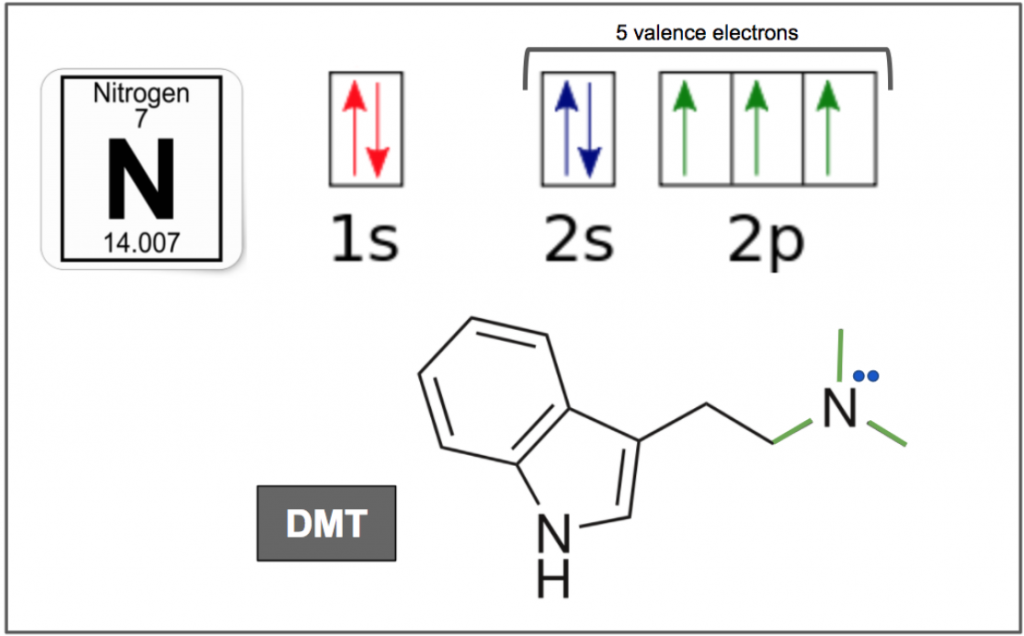

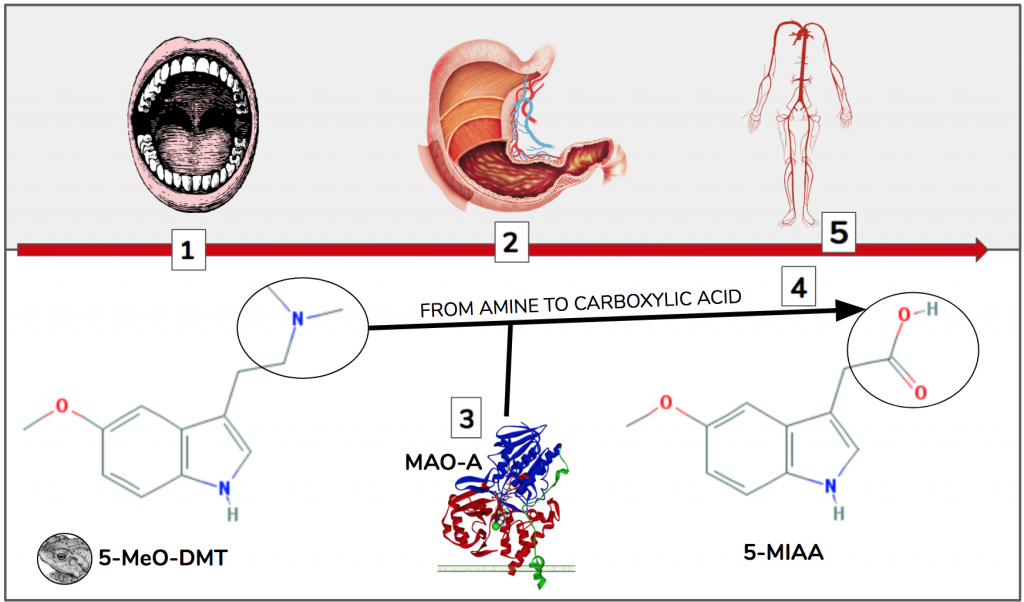


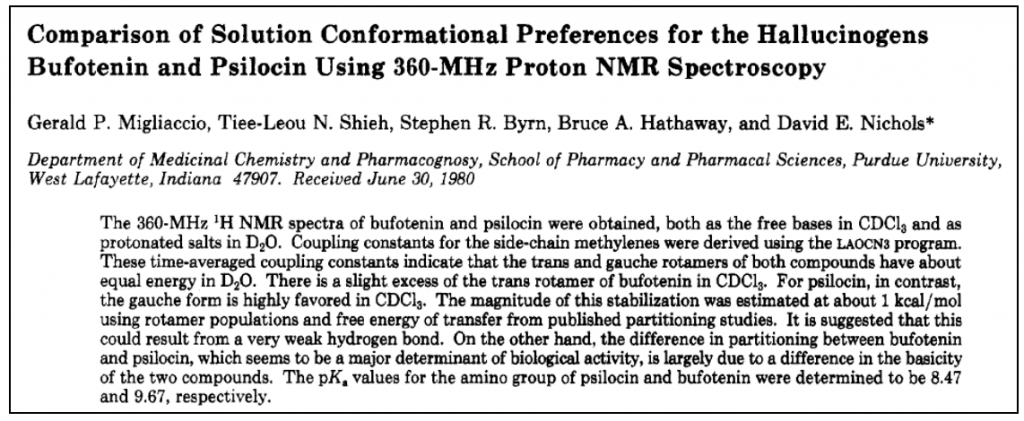 Figure 3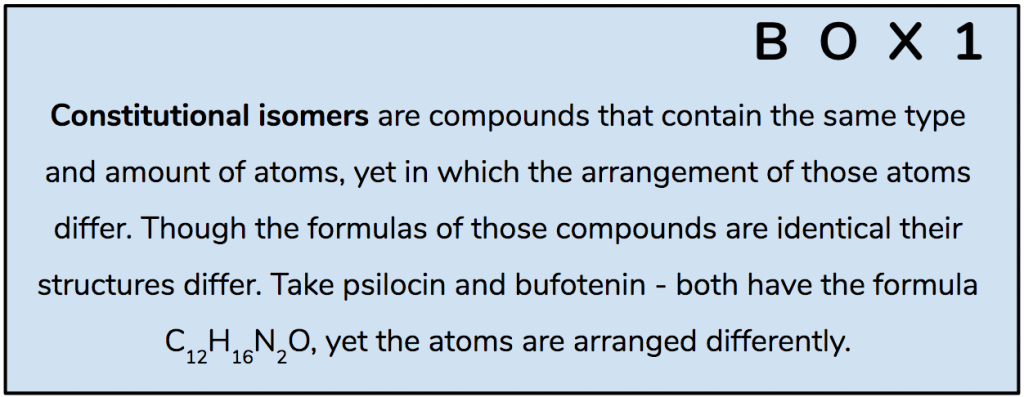


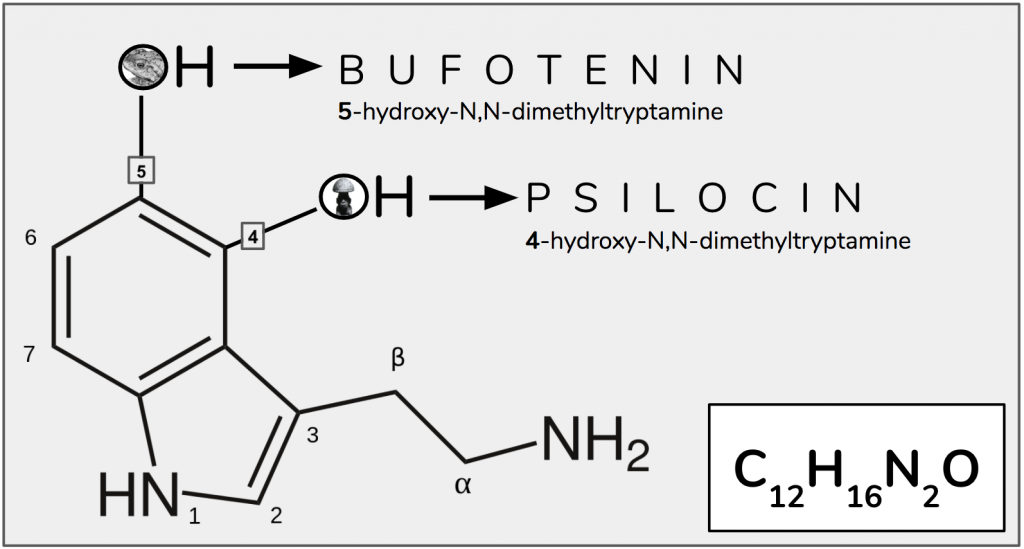


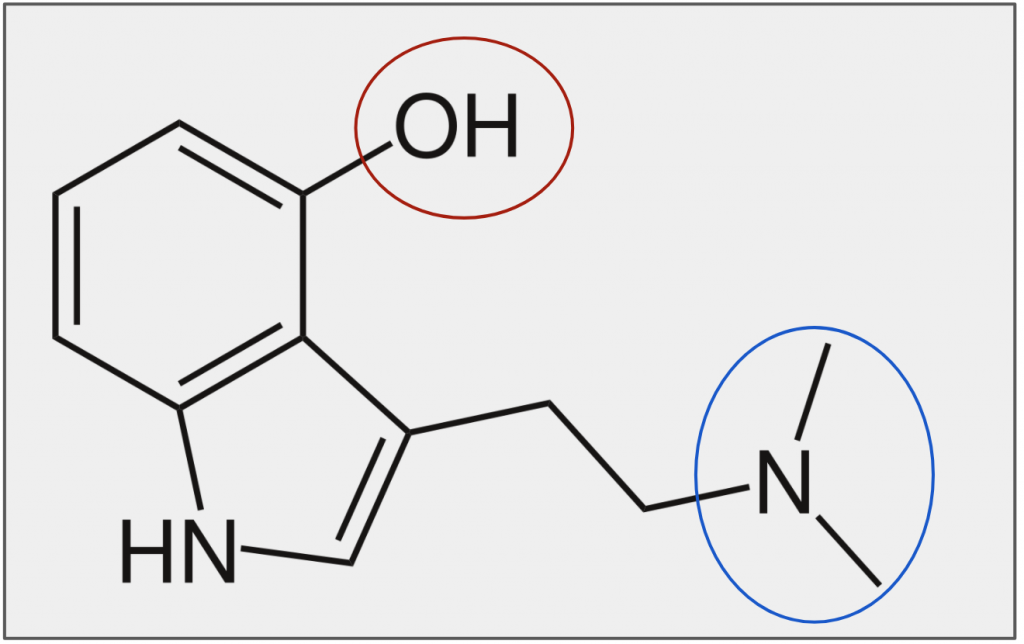


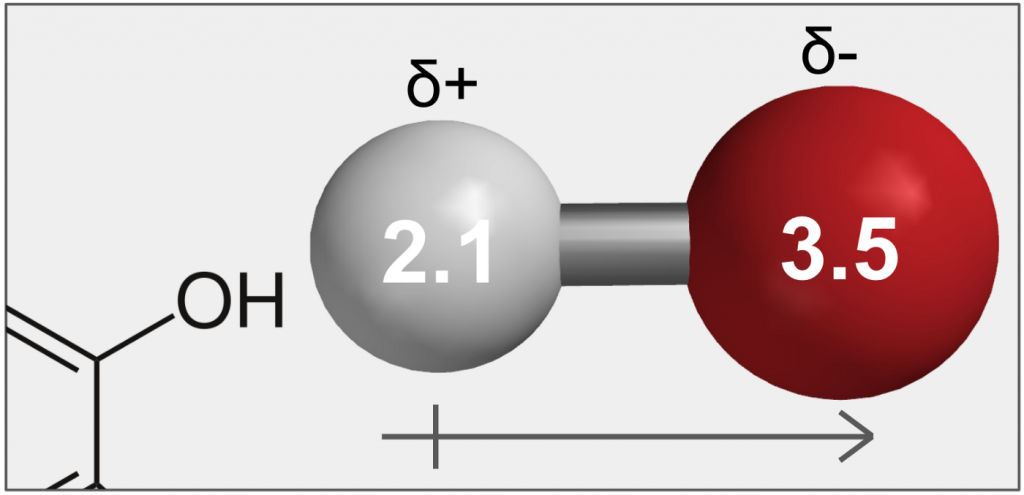


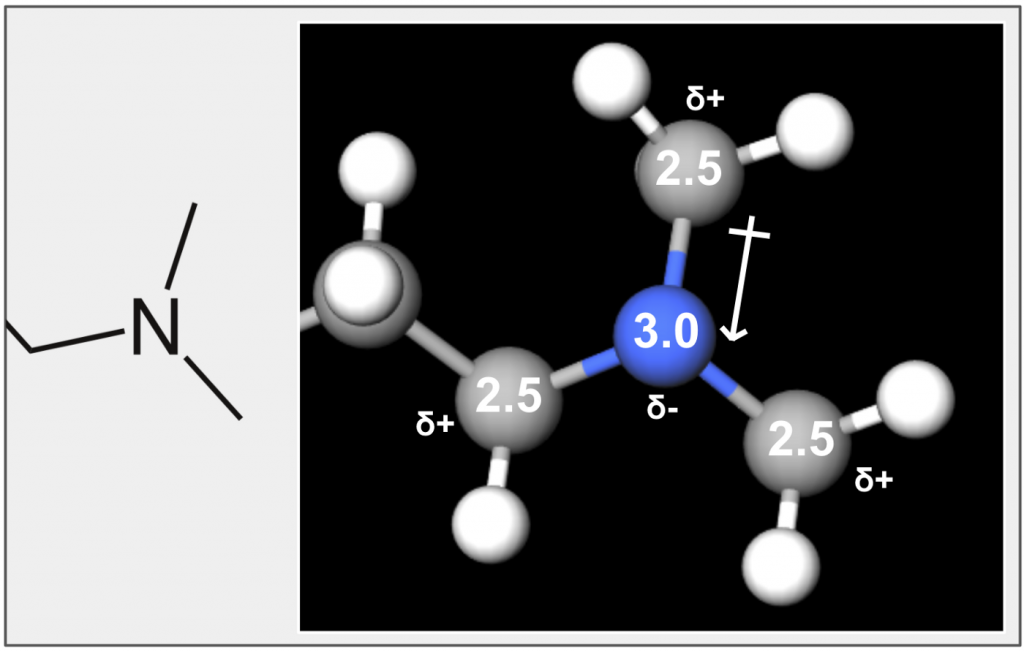


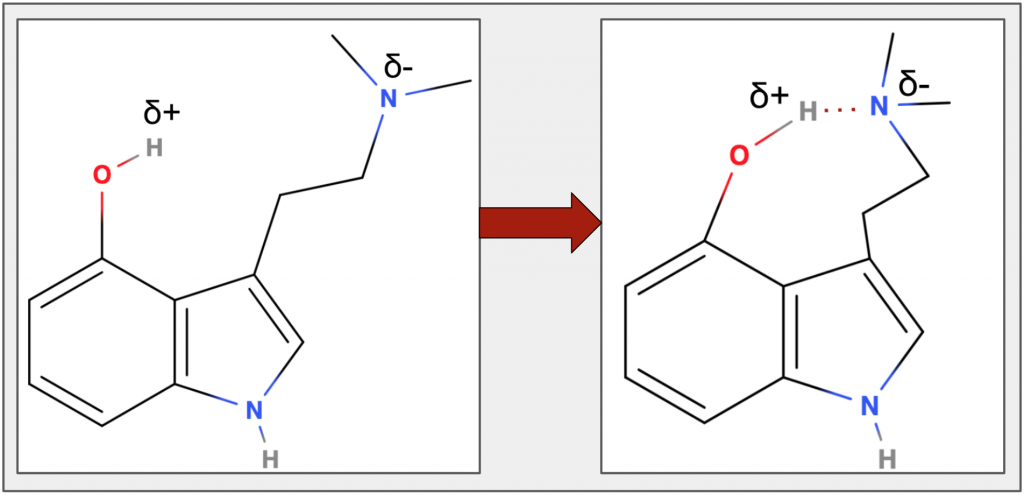


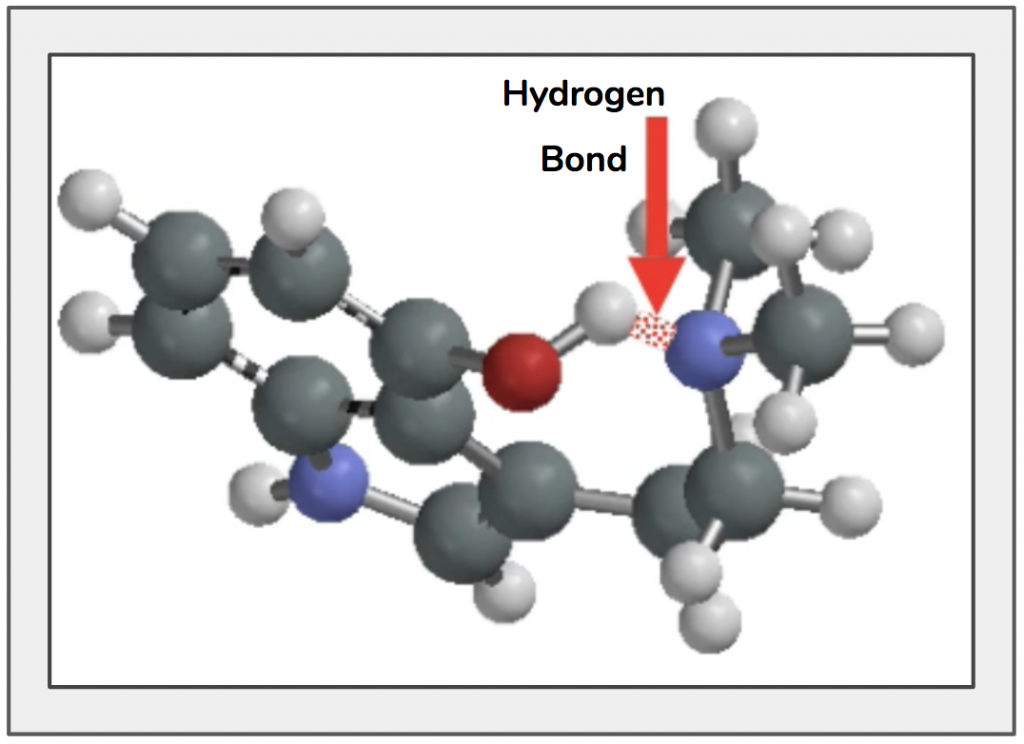


 Figure 14

 When they measured the pKa and the Log P for both psilocin and bufotenin they found the following:


 talie earned her Master’s in Social Work from Columbia University in 2014, and her Bachelor’s in History from Yale University in 2011. At Columbia, Natalie served as a Policy Fellow at the Drug Policy Alliance, where she helped legalize medical marijuana in her home state of New York, and worked to end New York’s racist marijuana arrests. Natalie has also worked as a court-mandated therapist for individuals arrested for prostitution and drug-related offenses, and as a middle school guidance counselor at an NYC public school. Natalie’s clinical work with trauma survivors spurred her interest in psychedelic-assisted therapy, which she believes can ease a wide variety of both mental and physical ailments by addressing the root cause of individuals’ difficulties, rather than their symptoms. Through her work at MAPS, Natalie advocates for research to provide evidence-based alternatives to both the war on drugs and the current mental health paradigm.