In recent years, something quietly disruptive has been occurring inside the world of modern psychedelic medicine. At ketamine-assisted therapy clinics, we are hearing about patients describing encounters with deceased loved ones. For their potential to open access to the transcendent, psilocybin-assisted therapies are being utilized to ease existential distress at the end of life. Western-trained physicians are finding themselves transformed by experiences that do not fit neatly into clinical language.
These experiences are not marginal. They are showing up at the center of care, and they raise a question that our culture has tried to postpone: what happens when evidence-based science guides us back to meaning, mystery, and spirituality?
It appears that modern medicine cannot simply dismiss the ever present immaterial. We are currently living through what feels like a convergence point. Psychedelic treatments are reentering mainstream medical contexts, in large part, to address our worsening modern problems, driven by increased strain on psychological, social, and ecological systems. Anxiety, depression, loneliness, and burnout are no longer fringe conditions; they are structural. As these problems intensify, it is becoming harder to maintain and defend proposed boundaries between science and spirituality.
One framework that has helped me think about this modern convergence comes from the Indigenous Prophecy of the Eagle and the Condor, shared in various forms across the Americas. In one version from Peru, the Eagle represents the path of the mind: intellect, technology, and materialism. The Condor represents the path of the heart: relationship, intuition, and spirituality. The ancient Peruvians foretold of a time when humanity would face a particularly difficult period, marked by imbalance in both the outer world and our inner lives. According to the prophecy, to make it through this period, the Eagle and the Condor would need to learn how to fly together. Science and spirituality, and their respective paths, would have to learn how to soar together.
This prophecy can serve as a metaphor. One that resonates powerfully with our current predicament. For centuries, Western culture has privileged the Eagle. We have built extraordinary technologies and refined scientific methods. But in the process, we have marginalized the Condor, treating spirituality and inner life as subjective, secondary, or irrelevant to health. Psychedelic medicine is now exposing the limits of this orientation.
If science and spirituality are going to coexist meaningfully in this new era, the relationship between them will have to mature. “I’m right and you’re wrong” is no longer a workable posture, especially given the stakes. The past three decades have guided us into this developing convergence. We have seen the steady reemergence of psychedelic clinical research, beginning in the 1990s, and accelerating into what some have called a psychedelic renaissance. During this same distinctive period, we have witnessed the rise of the internet, mobile computing, advances in physics and cosmology, and our first real encounters with artificial intelligence. Our tools continue to become increasingly powerful just as our collective sense of meaning slips through the cracks.
We are now halfway through what Rick Doblin has called the Psychedelic Twenties. MDMA-assisted therapy has been approved for limited medical use in Australia. Psilocybin services have been authorized in multiple U.S. states. Ketamine clinics with a psychedelic orientation are becoming increasingly common. Alongside these developments, clinicians are confronting experiences that their training did not prepare them to interpret. Patients are not only reporting symptom relief; they are reporting encounters with purpose, forgiveness, grief, and connection. These are not side effects. This is central to how these therapies work.
My own path has unfolded across this same terrain. As a teenager, in the 1990s, I survived a near-death experience that fundamentally altered my understanding of reality. I later trained in Western medicine, learning to diagnose, categorize, and treat illness through established biomedical frameworks. Despite my allopathic medical education, that early mystical experience never completely washed away. Eventually, it led me to pursue traditional education in the Peruvian Amazon, where healing is understood as inseparable from our relationship to nature, community, and spirit. Later still, in the 2020s, I found similar healing through work with a psychedelic psychotherapist back in Arizona.
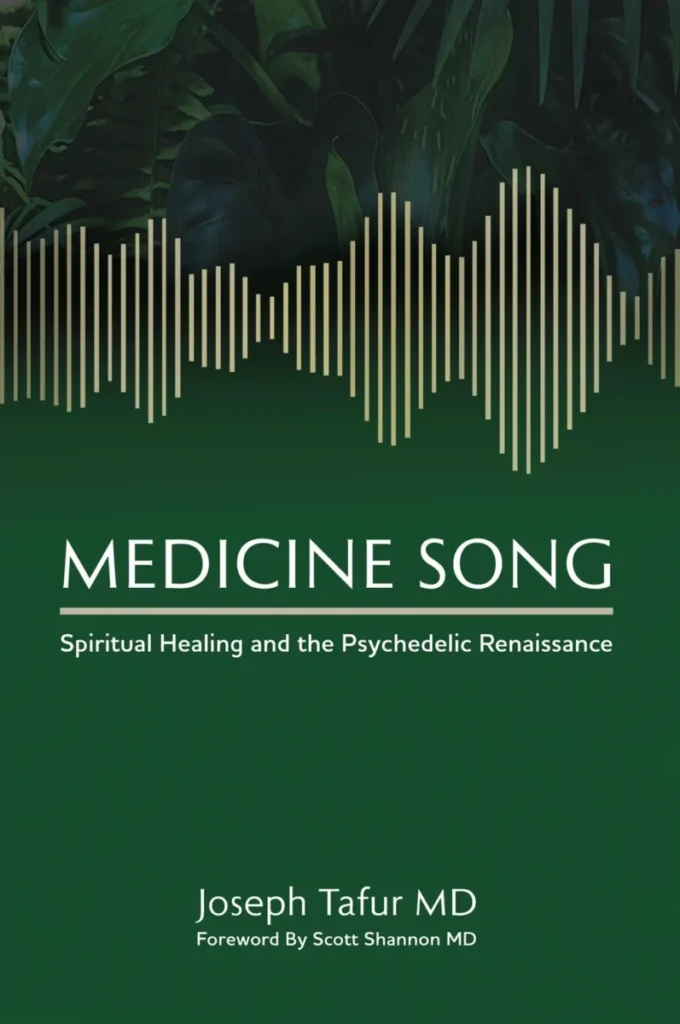
These experiences are data points from a life lived at the intersection of worlds we too often insist must remain separate. They are also the ground from which my book, Medicine Song, emerged. The book weaves together these personal stories not to argue against science, but to suggest that science alone is not enough. The Eagle and the Condor must soar together. Deep healing often involves a reorientation toward meaning, belonging, and the sacred.
We are living through a period of great upheaval that demands re-harmonization, both within ourselves and in the systems we inhabit. Psychedelic medicines, spiritual practice, and sacred plant traditions (utilized responsibly and in reverence) can catalyze vital emotional and existential healing. As this healing unfolds, it frequently brings with it a spiritual awakening: not necessarily belief-based, but relational, connective, and orienting.
The question before us is not whether spirituality belongs in psychedelic medicine. Patients are already answering that question with their experiences. The real question is whether our medical and cultural institutions are willing to meet reality where it is, rather than where we once hoped it would remain. If the Eagle and the Condor are to fly together, neither can dominate, and neither can be dismissed. Our future health, individually and collectively, may depend on our willingness to let both paths inform what healing truly means.